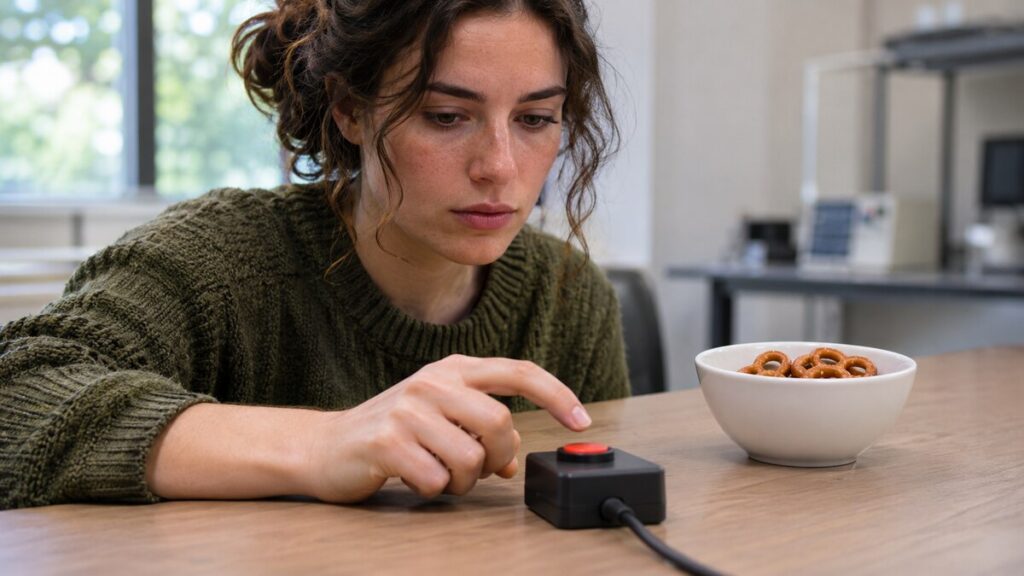
There is a bowl of snacks on the table and another packet in a cupboard upstairs. Reaching into the bowl costs almost nothing. Getting the packet means interrupting a conversation, getting out of a chair and climbing the stairs. If a person eats more after using cannabis, which part of that decision changed? The snacks might taste better. The person might get hungry sooner. Or the trip upstairs might suddenly seem worth making.
Count the visits to the bowl
In an early residential laboratory study of cannabis and eating, six men lived in a setting where researchers could track what they ate. Increased calorie intake after cannabis was attributable to more frequent snacking occasions. That detail matters. A person can consume substantially more over an evening without sitting down to a noticeably larger dinner. The sequence of small decisions may explain something the dinner plate cannot.
A later investigation in people and rats followed intake on a much shorter clock. The human participants had access to snacks and drinks after a laboratory session. The researchers measured consumption at intervals and asked people to rate taste. The increase in energy intake appeared in the first half hour of food access. That interval began when food became available, after earlier testing had taken place. It was not a measurement of how soon after using cannabis anyone anywhere would feel hungry.
More calories need not mean a new favorite food
The human participants in the later study increased their energy intake without a corresponding change in the relative contribution of different macronutrients. Imagine eating more from each of three bowls while keeping the proportions roughly the same. Total consumption rises even if the balance among the foods scarcely shifts. A story about a sudden preference for sugar or fat would require evidence about those proportions, not merely a count of wrappers.
A human experiment using food photographs and a chocolate milkshake approached the distinctions from another direction. Volunteers rated how much they liked and wanted pictured foods, while the researchers assessed intake in separate conditions. A photograph can prompt desire before someone tastes anything. Asking a person to rate a picture and recording how much they consume give the investigator two chances to find out where the change occurred.
The price of a mouthful
In animal research, a food reward can be given a behavioral price. An animal may have to perform a response to obtain a portion; later portions can require more responses. The point at which the animal stops working tells the investigator something about effort it will expend under those conditions. Studies of cannabinoid signaling and food reinforcement show why pre-existing hunger matters to that measure. The same reward can command a different amount of work depending on the animal’s earlier access to food.
The parallel rat experiments in the newer cannabis study also let investigators observe the moment eating began and the number of bouts. After cannabis exposure, rats began eating sooner and returned to eat more often. Animal experiments can make the choice and its timing unusually visible. A scientist still cannot ask a rat whether a mouthful tasted nostalgic or whether a nearby sound distracted it. The observations suggest mechanisms to test in people without supplying a transcript of human experience.
The distance to the cupboard
For a person seated beside a snack bowl, wanting and liking and the act of eating may occur so close together that they seem like one event. Move the food upstairs and the distinctions become clearer. Someone might want it more and still stay seated. Someone else may eat it because it is within reach without reporting any unusual hunger.
That is why the best evidence about the munchies comes from several measures used together. A weighed portion tells us what disappeared. A taste rating records a judgment. Repeated visits or work performed for food reveal something about the choices leading up to consumption. The staircase in the opening scene is imaginary, but the question it poses is experimentally real: what is the snack worth before the first bite?