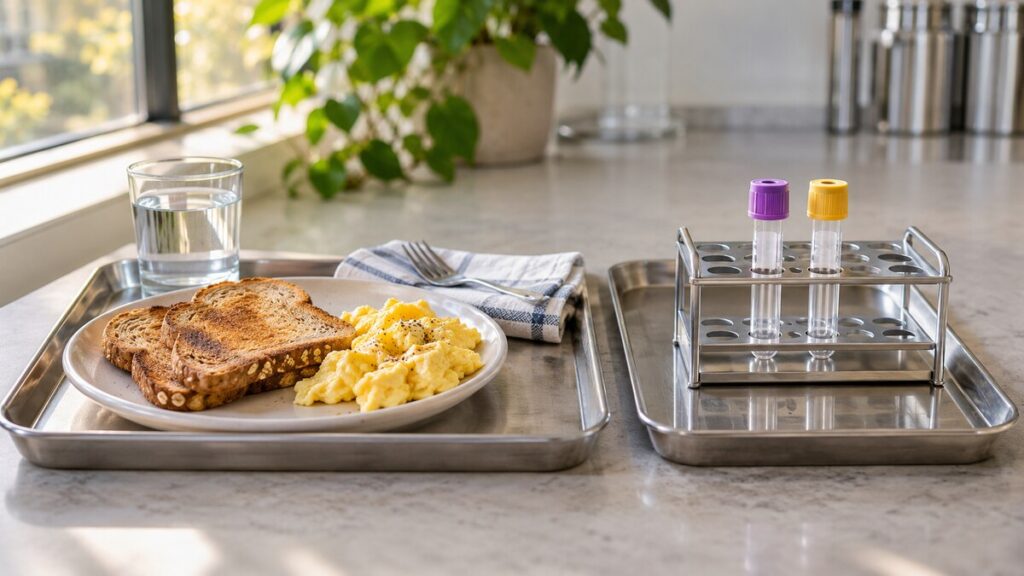
Every participant ate a brownie. On one visit it contained cannabis. On another the active cannabis was inhaled and the brownie was a placebo. On a third kind of visit, neither preparation contained active cannabis. For a scientist interested in appetite, the apparently incidental baked good was one of the most important parts of the experiment. A brownie does something to a person’s hormones even when it contains no cannabis at all.
The snack that served as a control
In a laboratory study of twenty adults, researchers compared oral, smoked and vaporized cannabis with placebo on separate visits. They collected blood at specified times and measured several hormones involved in appetite or metabolism. Each participant experienced all four conditions. Someone whose insulin normally rises sharply after a snack could therefore be compared with that same person on another day.
Under placebo, insulin rose after the brownie. Active cannabis altered that response, with a smaller rise at some sampling times. That is an interesting result precisely because insulin does more than track hunger. It helps regulate the handling of nutrients after food arrives. The study did not measure blood glucose, so the insulin curves alone cannot reveal how efficiently the participants cleared sugar from the bloodstream. Nor can they tell us who wanted a second brownie.
Which kind of ghrelin?
Ghrelin is often introduced as the hunger hormone. In a research paper the next word matters. The investigators measured both total ghrelin and an acylated form, which carries a chemical modification important to its action at the familiar ghrelin receptor. Total ghrelin was higher in the oral cannabis session than in the smoked session. The study found no significant treatment effect for acylated ghrelin. Reporting only that cannabis raised a hunger hormone would lose both the distinction between forms and the identity of the comparison.
Another hormone, GLP-1, was lower under the active cannabis conditions than under placebo. GLP-1 participates in the response to a meal, including signaling related to fullness. Finding a difference makes it a candidate for further investigation. Showing that the difference caused people to eat more would require measuring eating and establishing the link between the two changes.
Let the volunteers choose something to eat
A separate controlled THC experiment brought food cues, subjective responses and food intake into the same investigation. Those measurements give an investigator several opportunities to be surprised. Someone can find a photograph of dessert unusually appealing yet leave dessert on the plate. A person can finish more food without describing a particularly strong feeling of hunger. Even the question “Would you like some?” measures something different when obtaining the snack takes effort.
A study of food motivation and energy intake examined how much value people placed on food and how much they consumed. Its behavioral findings make a useful companion to the hormone study. They do not retrospectively supply a missing measurement for those twenty people. The participants, procedures and observations belong to their respective experiments. Putting the findings side by side reveals which links in the explanation still need to be tested together.
Read the blood draw against the clock
Hormones rise and fall, and swallowing THC gives a different time course from inhaling it. A blood draw taken at the same minute after each exposure may catch one response near its peak and another while it is still developing. In a pilot investigation of appetite hormones in men living with HIV, a different population and protocol supplied another view of the question. Such contrasts are reasons to look closely at the methods before combining results.
The “munchies” describes an experience recognizable at a kitchen counter. A blood sample takes that experience apart into narrower possibilities. The most revealing experiment would follow the brownie, the hormones, the appeal of another bite and the choice to take it in the same person across time. Until then, the measured hormone is a clue about the journey between cannabis and the refrigerator, with several turns still out of sight.